
Civil Engineering is Not Just Bricks and Cement: Discover How It Shapes the Growth of Society and Builds the Future
Every civilisation is remembered not only by the stories it told, but by the roads, bridges and cities it built. From the Pyramids of Egypt to the Panama Canal, from the Roman Colosseum to India’s Konark Sun Temple, civil engineering has always been the most enduring expression of human progress.
But, this isn’t only about buildings alone. It’s about foresight, about imagining how people live, move and flourish and then giving that vision a physical form.
To study civil engineering is to study how societies organise growth, guarantee safety and make development equitable and sustainable. It’s not only about concrete, codes or calculations. It’s about asking: What needs to be built today to protect and enable tomorrow?
In India, that question carries added weight. This is a nation that balances centuries of legacy with one of the world’s fastest-growing urban transformations. From national highways that must connect 1.4 billion people to villages that need a resilient water supply, civil engineers are central to how the country adapts, expands and survives.
A civil engineering course introduces you to this responsibility - not as a distant theory, but as a daily practice. You’ll learn the mathematics of structures, the science of materials, the art of design and the ethics of building for people and planet.
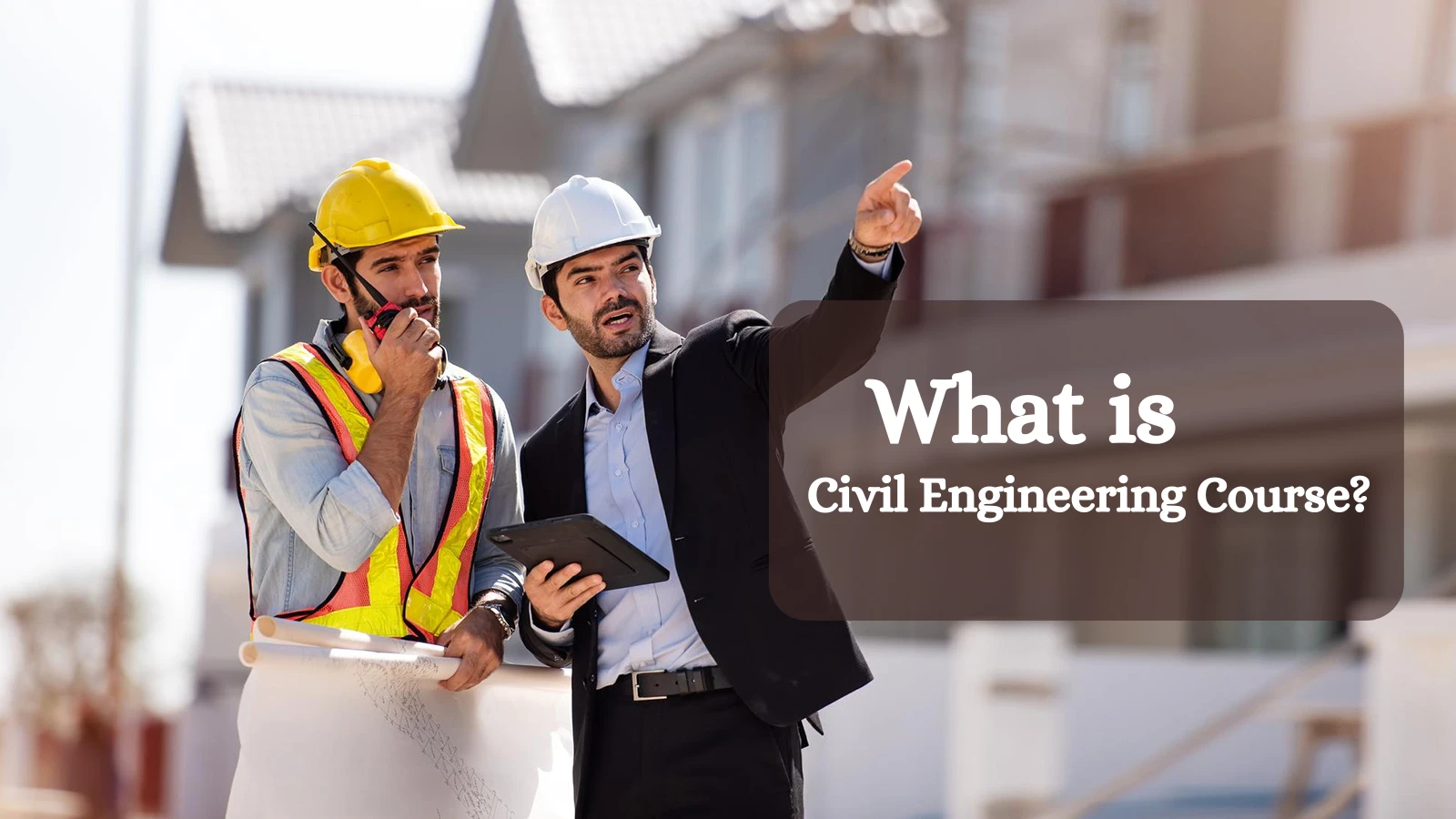
What is Civil Engineering Course?
From the Pyramids of Egypt to the metro tunnels in the world’s most populated cities, civil engineering reflects the image of thinking and growth of a society.
The most preferred civil engineering course after 12th is B.Tech. Civil Engineering which is a 4-year journey of learning how to design, build and manage the infrastructure that keeps societies running. This course is not only about some classroom subject. It’s a training ground to become a builder of futures for people, for the planet and for generations to come.
You don’t just learn how to draw blueprints of structures and build them. You learn how to design safety into cities, plan for floods, make buildings last longer and even make travel faster and cleaner.
Building the World You Live in: Why Civil Engineering Matters
Civil engineering is all around us. The clean water from our tap, the school we studied in, the road outside our house - all of it came from civil engineering.
We rarely think about it, but someone had to make sure your building stands during an earthquake, someone planned the drainage that prevents flooding and someone designed the flyover that saves you an hour every day.
That’s a civil engineer.
Here’s why this course matters now more than ever:
-
India is growing fast and to build it, we need expert civil engineers.
-
The world needs safer, smarter infrastructure.
-
Civil engineers guide policy, work with governments, run consultancies and launch green startups.
When civil engineers start building something, they first think about the safety of people around, the sustainability of the planet, its contribution to drive society towards a better lifestyle and more. This is why they are commonly termed as world builders and matter the most for developing the nation.
Civil Engineering Course Details: What You Actually Learn
Let’s uncover what civil engineering course subjects you will learn in this programme:
Foundational Civil Engineering Course Subjects
Let’s uncover the civil engineering course details and explore what subjects you will study to build a strong foundation.
|
Subjects |
Your Learnings |
Relevancy in Real Life |
|
Engineering Mechanics |
Forces, motion, structures |
How bridges stand and stay safe |
|
Materials Science |
Properties of concrete, steel, composites |
Choosing the right material for buildings |
|
Soil Mechanics |
Behaviour of earth materials |
Ensuring buildings don’t sink or crack |
|
Structural Analysis |
Load calculations, stress, strain |
Designing earthquake-proof and long-lasting structures |
|
Surveying and Geomatics |
Mapping, land measurements |
Planning roads, buildings, cities |
|
Fluid Mechanics |
Water flow, pressure systems |
Managing floods, designing dams and pipelines |
These subjects answer questions like:
-
Why do buildings crack?
-
How much load can a beam carry?
-
How do you know if land is safe to build on?
Core Civil Engineering Course Subjects
Now you move from theory to solving problems. This part of the course shows you how to apply what you’ve learned in the real world.
Here are the core civil engineering subjects:
-
Transportation Engineering
-
Water Resources Engineering
-
Environmental Engineering
-
Structural Engineering
-
Geotechnical Engineering
-
Construction Management
-
Concrete Technology
-
Bridge Engineering
-
Solid Mechanics
-
Earthquake Engineering
-
Design of Steel Structures
-
Reinforced Concrete Structures
Learn Here, Build Everywhere - Your Career in Civil Engineering Starts at MS Ramaiah University of Applied Sciences
At MS Ramaiah University of Applied Sciences, the B.Tech. Civil Engineering programme is truly designed based on the requirements and responsibilities of today’s infrastructure sector and anticipation of upcoming advancements.
The programme was started here in the year 1971 and since then it has been redesigned, restructured and upgraded according to the growing demand of the real world. Coming through a rigorous and continuous evolution, today this course not just reflects a proud legacy of producing world-class engineers but also showcases the commitment to provide a world-class learning experience.
MSRUAS believes that nurturing civil engineers does not just mean completing a defined syllabus, but it’s about preparing a mindset among students to be ready to tackle challenges that go beyond textbooks.
Continuing our history of producing best engineers, the university has meticulously designed the syllabus of the program around the practical demands of industries. With the world-class learning facilities, best faculty and real-world exposure, we do not just produce civil engineers, we nurture the leader who will build the path of future developments.
Synopsis
A civil engineering programme helps you gain the necessary skills to build what the world depends on: roads, bridges, water systems and resilient cities. It meticulously integrates theory, fieldwork and labs, which help you gain the expertise to solve real problems on a large scale. From structural design to environmental solutions, every subject in the course connects to how society lives and grows. That’s the true answer to what is civil engineering course.
If you're looking for a degree that blends science, service and strategy, then B.Tech. Civil Engineering at MS Ramaiah University of Applied Sciences is your starting point. Gear up and apply now; admissions are closing soon.
FAQs
Is there any scope for civil engineering in India?
Yes and it is very vast. You can work in construction, urban planning, government projects, transportation, environment, water management, consultancy, etc.
What are civil engineering course subjects?
Civil engineering course subjects include:
-
Structural Engineering
-
Transportation Engineering
-
Environmental Engineering
-
Geotechnical Engineering
-
Fluid Mechanics
-
Water Resources Engineering
-
Construction Engineering
-
Material Science
-
Soil Mechanics
-
Building Information Modeling
What is civil engineering course fees?
The civil engineering course fees in India for the complete 4 years can range from around 3 lakh to around 10 lakh.


 ADDRESS
