
Happening
One-Day Workshop on “Textiles for Global Market Strategy – Achieving USD 100 Billion Exports”
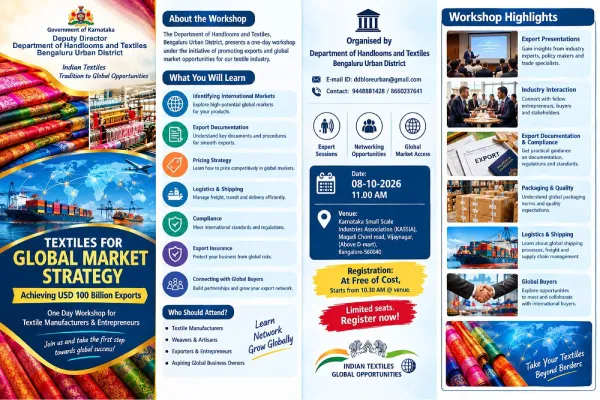
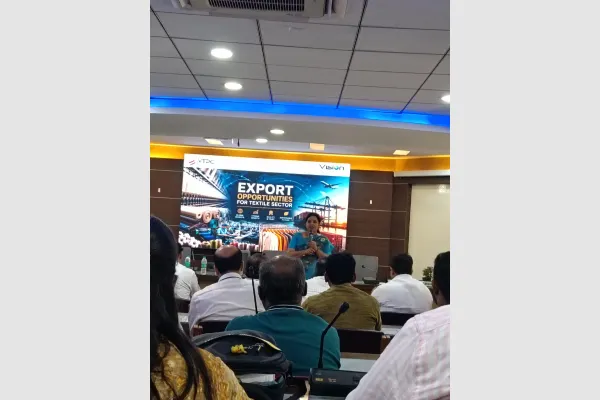
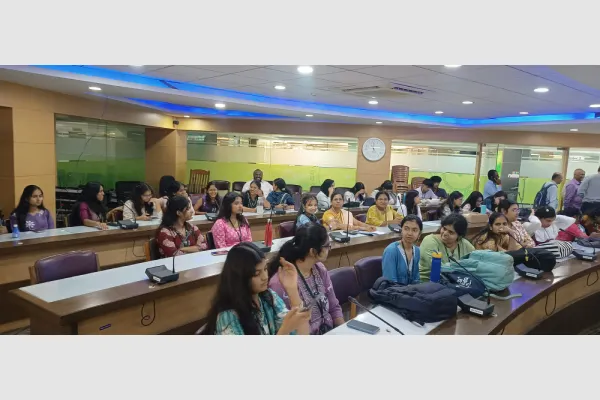
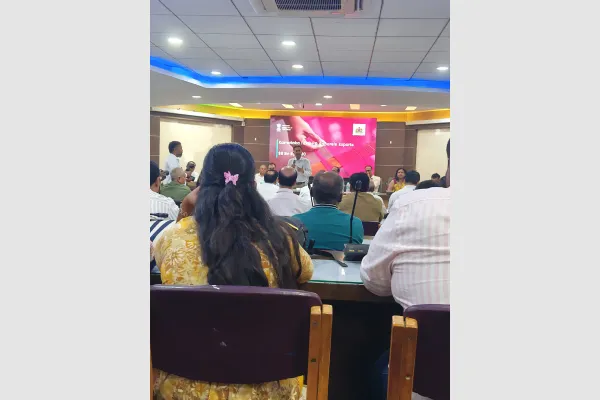
B. Des Fashion Design students, accompanied by staff, attended a one-day workshop on 8 October 2026 titled “Textiles for Global Market Strategy – Achieving USD 100 Billion Exports.” The workshop was organised by the Department of Handlooms and Textiles, Bengaluru Urban District, in association with KASSIA, Bengaluru. The workshop aimed to create awareness about export opportunities and facilitate access to global markets. It brought together industry leaders, policymakers, academic experts, and exporters to deliberate on a strategic roadmap for the textile sector. The event focused on capitalising on global market shifts, improving manufacturing competitiveness, and identifying actionable insights to propel India’s textile exports towards the ambitious USD 100 billion target.
The technical sessions highlighted global trade dynamics and market intelligence, including analysing shifting global supply chains and emerging bilateral trade agreements, identifying high-potential non-traditional markets for synthetic and technical textiles, navigating tariff structures, and effectively leveraging Free Trade Agreements (FTAs).
The sessions also focused on enhancing competitiveness and supply chain efficiency through the implementation of Industry 4.0 technologies, automation, and data analytics in textile manufacturing. Discussions included reducing logistical bottlenecks to optimise turnaround times for international buyers and upgrading infrastructure through integrated textile parks to achieve economies of scale.
Sustainability, compliance, and the circular economy were also key areas of discussion. Participants learned about adapting to stringent global Environmental, Social, and Governance (ESG) compliance requirements, adopting green manufacturing processes, zero liquid discharge (ZLD), and renewable energy sources, and scaling up textile recycling and circular economy frameworks to meet international consumer preferences.
Product innovation and value addition were emphasised, with a focus on shifting from low-value commodities to high-value garments and functional textiles. The sessions highlighted the importance of investing in research and development for technical textiles used in the automotive, medical, and defence sectors, as well as enhancing design capabilities and brand-building strategies to capture premium market segments.
The workshop provided practical insights into identifying international markets, export documentation and compliance, pricing strategies for global markets, logistics and shipping, export insurance, packaging and quality standards, connecting with global buyers, and exploring export opportunities.
The strategic recommendations included harmonising state and central government policies and incentives to support raw material security and reduce input costs. The importance of skill development was also emphasised through specialised training programmes to bridge the gap in digital manufacturing and advanced textile technologies.
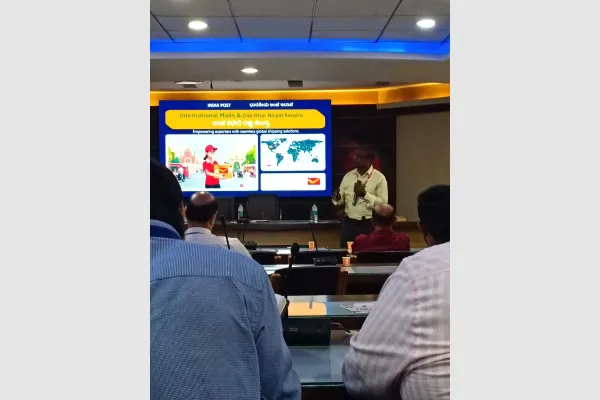
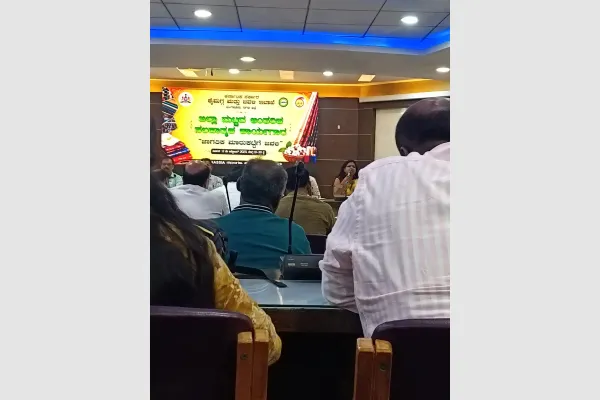
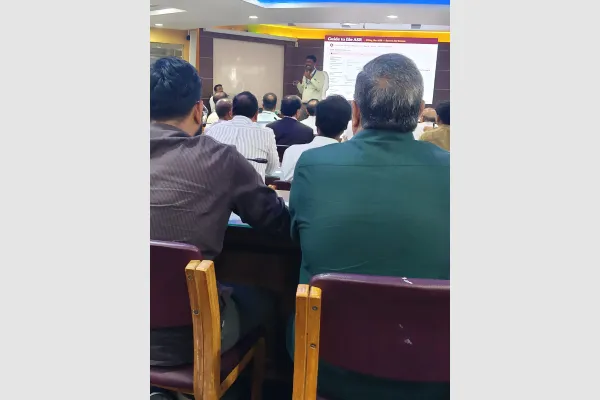
During the workshop, students and staff interacted with textile manufacturers, weavers, artisans, exporters, and entrepreneurs. The knowledge gained about international markets, textiles, and apparel products was highly beneficial. All participants were awarded certificates of participation.


 ADDRESS
